866.313.0959

Therapeutic Yoga for Seniors FAQ

Frequently Asked Questions

What are the steps to apply and be accepted into the program?
Who can apply to the program?
How much does the program cost?
Is there financial aid available?
What is the cancellation policy?
When does the program start and end?
How will the program be structured?
What is the daily schedule?
Are meals included?
What will I learn in this training?
How is this training different from other professional development programs for yoga teachers?
What credentials will I have upon successful completion of the program?
How many Yoga Alliance continuing education credits (CEUs) will students earn?
Where is the training located?
I am flying in from out of town for this training, which airport will I use?
What kind of housing is available for out-of-town students?
Who are the program co-directors?
Who is on the faculty?

What are the steps to apply and be accepted into the program?
The first step is to download the application form from our website and return it by email, fax, or mail. We will process your application within approximately 3 weeks. If you are accepted into the program, we will send you an acceptance letter. Once accepted, in order to reserve your place in the training, you will need to call our reservations department toll-free at 1-866-313-0959 with payment. Acceptance into the program without payment does not reserve your place in the program. Registrations are taken on a first-come, first-served basis.

Who can apply to the program?
Any yoga instructor who is registered with Yoga Alliance or who has equivalent training and experience is invited to apply for enrollment.

How much does the program cost?
The tuition is $2,195 per person for the program. We offer an Early Enrollment rate of $1,995 if you are accepted and make your initial deposit by the Early Enrollment deadline (September 2, 2011).

Is there financial aid available?
We have very limited financial aid available ranging from $250-$500 awards. You must first be accepted into the program before applying for financial aid. When you are submitting your program application, please indicate that you are requesting financial aid. We will be happy to send you a financial aid application form with your acceptance letter into the program.

Please note: notice of financial aid decisions may take 4-6 weeks from the time of application. Award monies will be applied to your remaining balance owed.

What is the cancellation policy?
Please see our Registration and Cancellation Policies.

When does the program start and end?
The program will begin on Monday October 15 at 2 pm, and end on Monday October 22 at noon. Please arrive between 1:30 and 1:45 for check-in on the first day.

How will the program be structured?
Each day will involve a balance of lectures, movement, small group work and discussions.

What is the daily schedule?
We will meet on the first day from 2-5:30 pm and on the last day from 9 am to noon. All other days we will meet from 9 am to 5:30 pm, with a 75 minute break for lunch.

Are meals included?
Lunch is prepared by Integrative Medicine's chefs using natural, local ingredients.  This meal, plus a morning and afternoon snack, is included in the cost or the program and will be served daily on days 2-7 of the training. Vegetarian options are always provided. If you have food allergies or other specific dietary needs that we should to be aware of, please be sure to clearly indicate these on your application. We may not be able to accomodate all needs.

What will I learn in this training?
Our goal is to help trained yoga instructors integrate knowledge gained from modern medicine's evidence-based science with the ancient wisdom, experience and tradition of Yogic teachings. Areas we will cover include:

  • How to safely and effectively teach yoga to older adults
  • Health conditions common to seniors¡Xincluding osteoporosis, arthritis, heart disease, chronic pain and joint replacement
  • How specific health challenges may affect yoga practice
  • How commonly-used medications may affect yoga practice
  • Hands-on training in teaching skills specific to older practitioners with varied health concerns
  • Yoga practices to help relieve symptoms of common ailments
  • Yoga practices to help improve function and enhance balance
  • Practical strategies for adapting yoga practice to older bodies, minds and spirits

How is this training different from other professional development programs for yoga teachers?
As an integrative medicine program, we are partnering with Western medical specialists who rely on an evidence-based model that requires scientific support to guide choices in practice. Although much of traditional yogic teachings are rooted in generations of experiential wisdom, many of the assumptions widely held by our teaching community are scientifically unsubstantiated. In addition, only recently have yoga teachers encountered students who have reached advanced age¡Xmany of whom present with challenges such as artificial joints, canisters of supplemental oxygen, or prosthetic heart valves. While research into the effects of yoga on health is emerging, there is currently a scarcity of scientifically-rigorous evaluation especially for older adults. For this reason, yoga teachers of seniors are navigating uncharted territory and are frequently dealing with the unknown. Structured on the foundation of the physiology of aging, this program offers a scaffolding from which to integrate specific recommendations gleaned from what is known and to creatively adapt the practice in areas that are yet to be clarified.

What credentials will I have upon successful completion of the program?
Students who successfully complete this program will earn a Certificate of Completion in Therapeutic Yoga for Seniors issued by Duke Integrative Medicine. Graduates may include on resumes that they have earned a certificate from Duke Integrative Medicine in Therapeutic Yoga for Seniors but may not say they are certified by Duke Integrative Medicine. Duke is not a certifying body for yoga.

How many Yoga Alliance continuing education credits (CEUs) will students earn?
Students will have an opportunity to earn a total of 50 CEUs for the 50 contact hours spent in the training.

Where is the training located?
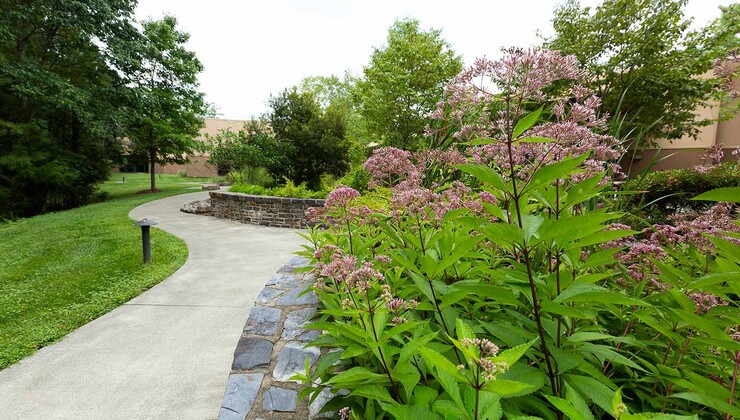
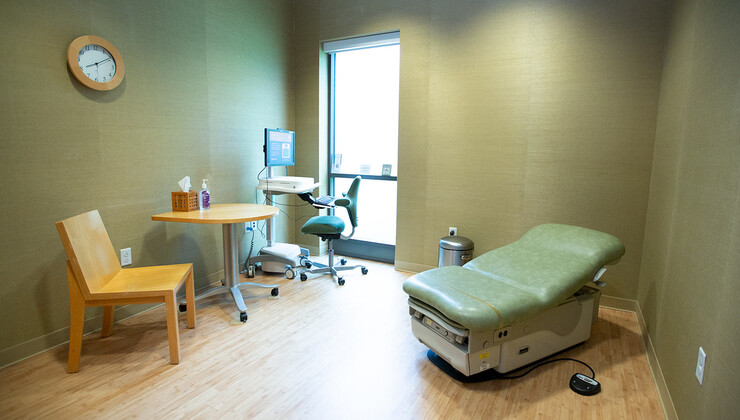
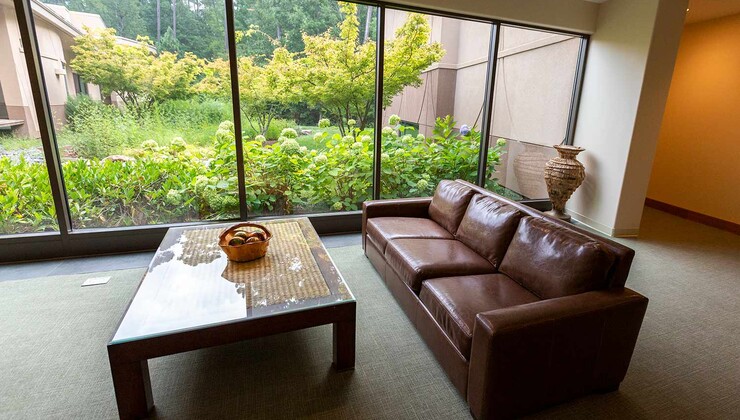
The program takes place at Duke Integrative Medicine, located on the Duke Center for Living Campus in Durham, North Carolina.

Duke Integrative Medicine
3475 Erwin Road | Durham, NC 27705
866-313-0959 (toll free)
www.dukeintegrativemedicine.org

Get directions to Duke IM here.

I am flying in from out of town for this training, which airport will I use?

Airline travelers will fly into the Raleigh-Durham International Airport (RDU).

What kind of housing is available for out-of-town students?

Homewood Suite by Hilton Durham/Chapel Hil/I-40
3600 Mt. Moriah Road | Durham, North Carolina, 27707
919-401-0610

We have reserved a block of rooms at this facility, which is about 5 miles away from Duke IM. These rooms each have two double beds, a separate living room area with a couch and TV, plus a kitchenette (full refrigerator, microwave, stovetop, coffee-maker, dishes and utensils). The $89 plus tax per night cost includes a warm buffet breakfast and a dinner. To make a reservation call the hotel and tell them you are a member of the "Yoga for Seniors" group.

After the early enrollment deadline has passed the instructors will contact registered participants via e-mail to help facilitate room sharing among those who may wish to share housing expense.

Washington Duke Inn and Golf Club
3001 Cameron Boulevard | Durham, NC 27705
919-490-0999 or 800-443-3855

The Washington Duke Inn is another highly recommended hotel close to Duke IM. All reservations must be made by contacting the hotel directly. Guests may be eligible for a discount by mentioning the DHW (Duke Health and Wellness) rate. All reservations are subject to room availability.

In addition, there are many other lovely hotels in the Durham area and other options will be sent to you upon enrollment. Public transportation in the area is hit or miss, so a car is recommended if the hotel of your choice does not provide shuttling.

See a listing of other area hotels here.


Who are the program co-directors?
The program co-directors are:

Kimberly Carson, MPH, E-RYT 200, is a health educator specializing in the therapeutic use of yoga and meditation for people with medical and/or physical challenges. She is a graduate of yoga teacher training programs at the Kripalu Center for Yoga and Health, Integral Yoga, and Yoga of the Heart as taught by Nischala Devi. Kimberly has developed and taught yoga programs being researched at Duke University Medical Center and Oregon Health & Science University. Her Yoga of Awareness program has been shown in research trials to reduce pain and fatigue in women with metastatic breast cancer, hot flashes, fatigue, and joint pain in breast cancer survivors, and pain and fatigue in women with fibromyalgia. She currently lives in Portland, Oregon, where she teaches Yoga of Awareness, Mindfulness Based Stress Reduction and specialized yoga classes at Oregon Health & Sciences University. She also teaches specialized classes for students living with conditions such as chronic pain, heart disease, cancer, and osteoporosis (as well as other medical concerns of aging). Visit her web site: www.yogaofawareness.org.

Carol Krucoff, E-RYT 500, is a Yoga Therapist at Duke Integrative Medicine and a health journalist. A frequent contributor to Yoga Journal, Carol served as founding editor of The Washington Post's Health Section and her articles have appeared in numerous national publications including The New York Times, Reader's Digest and Prevention. She is a graduate of Esther Myers' Yoga Teacher Training and Nischala Devi's Yoga of the Heart Cardiac & Cancer Teacher Training and has been practicing yoga for more than 30 years. Carol developed and taught a yoga program for seniors in the Gerofit gerontology rehabilitation program at the Durham, NC, Veterans Administration Medical Center and specializes in teaching yoga to older adults and people with health challenges. Certified as a personal trainer by the American Council on Exercise, Carol spent 10 years training in martial arts, where she earned a second-degree black belt. She is author of Healing Yoga for Neck and Shoulder Pain, creator of the audio home practice CD, ¡§Healing Moves Yoga,¡¨ and co-author, with her Duke cardiologist husband, Mitchell Krucoff, MD, of Healing Moves: How to Cure, Relieve and Prevent Common Ailments with Exercise. Visit her web site: www.healingmoves.com.

Who is on the faculty?
Faculty will include a broad array of Duke medical experts including physicians, exercise physiologists, physical therapists and health psychologists. Specific faculty members have included:

Rebecca Byrd, DPT graduated in 2000 from Duke University with a BS in biology and received her Doctorate of Physical Therapy degree from the University of St. Augustine in 2004. She has been a practicing physical therapist since that time. Rebecca worked at Duke University Hospital for 4 years and currently works at Duke’s Center for Living with pulmonary rehabilitation, arthritis rehabilitation, and general Orthopedics.

Rebecca H. Crouch, PT, MS, CCS, FAACVPR, is Manager of Physical Therapy Services at the Duke Center for Living and Coordinator of Pulmonary Rehabilitation at Duke University Medical Center. She serves as a clinical associate faculty member for the Duke University Doctoral Program of Physical Therapy and for the University of North Carolina at Chapel Hill’s Division of Allied Health/Physical Therapy. Crouch has been a member of the Duke University physical therapy staff since 1979 and the UNC faculty since 2005 and is board certified in Cardiopulmonary Physical Therapy. She is a member of the American Physical Therapy Association, the American College of Chest Physicians, the American Thoracic Society and the Pulmonary Rehabilitation Assembly. Certified as an exercise test technologist by the American College of Sports Medicine, she is also an American Association of Cardiovascular and Pulmonary Rehabilitation Fellow. As an expert on physical activity for people with respiratory ailments, Crouch lectures widely on the topic of pulmonary rehabilitation.

Katherine S. Hall obtained her Bachelor of Arts degree in Psychology from Pennsylvania State University (2002) and her Masters (2005) and PhD degrees (2009) in Kinesiology from the University of Illinois at Urbana-Champaign. Her area of specialization is in Behavioral Medicine/Exercise Psychology. She is currently a Special Geriatrics Fellow in the Geriatric Research, Education, and Clinical Center (GRECC) at the Durham VA Medical Center. Dr. Hall’s research focuses on the psychosocial determinants (e.g., self-efficacy, barriers, social support) and consequences of physical activity, with an eye to preventing disability and the maintenance of cognitive functioning and quality of life in older adults. Dr. Hall has had much experience designing and implementing randomized controlled exercise trials and has worked with a variety of populations, including community-dwelling older adults, residents of assisted- and independent-living communities, adults with Multiple Sclerosis, and middle-aged women. These trials have comprised aerobic training, anaerobic/strength training, and yoga.

Francis Keefe, PhD - Professor in the Department of Psychiatry and Behavioral Sciences and a member of the Cancer Prevention, Detection, and Control Program of the Duke Comprehensive Cancer Center. Dr. Keefe directs an active clinical research program concerned with the behavioral assessment and treatment of patients having acute and persistent pain. Dr. Keefe played a key role in the development of clinical pain services and pain research programs at Duke Medical Center. For 20 years he directed the Pain Management Program and was a leader in the development of Duke Medical Center's multidisciplinary pain programs (both out-patient and in-patient.) Dr. Keefe has developed and refined a number of treatment protocols for persistent pain conditions (e.g. cancer, arthritis) including spouse- and partner-assisted pain coping skills training interventions. Dr. Keefe has a keen interest in alternative interventions for managing pain (e.g. yoga-based interventions, forgiveness-based interventions, etc.) He has published over 200 papers, as well as 43 book chapters, and 3 books on topics ranging from pain during mammography to the assessment of cancer pain. He has served on numerous NIH Study Sections and recently completed his term as Chair of the NIH Behavioral Medicine Interventions and Outcomes Study Section.

Mitchell Krucoff, MD, FACC, FCCP – Professor of Medicine/Cardiology and interventional cardiologist at Duke University Medical Center. Dr. Krucoff is internationally recognized for his pioneering research in several areas including complementary therapies in patients with heart disease, computer-assisted heart monitoring and new modalities of coronary revascularization. His clinical trials include patients and hospitals in five continents, and he lectures globally on these and related topics. Author of more than 100 publications in the cardiology literature and book chapters in medical texts, Dr. Krucoff is Senior Editor of the Journal of Alternative & Complementary Medicine and past Editor-in-Chief of the journal Alternative Therapies in Health and Medicine. He is co-editor of the book "Integrative Cardiology: Complementary and Alternative Medicine for the Heart,” published by McGraw Hill Medical, 2007.

Kathy M. Shipp, PT, MHS, PhD -- Assistant Professor in the Division of Physical Therapy, Department of Community and Family Medicine at Duke University Medical Center. Dr. Shipp specializes in management of chronic diseases of older people, particularly osteoporosis and Paget's disease. As an epidemiologist, she is a Senior Fellow at the Duke Center for Aging. Her research focuses on acute and chronic effects of osteoporotic vertebral fractures, exercise for people with osteoporosis, and preventing falls in the elderly. She serves on the Scientific Advisory Council and the Education Committee of the National Osteoporosis Foundation and was a contributing author of Bone Health and Osteoporosis: A Report of the Surgeon General (2004). Currently, she is a Scholar in the NIH Building Interdisciplinary Collaborations in Women's Health (BIRCWH) program.

Patrick Smith, PhD, is a postdoctoral scholar in the department of Psychiatry and Behavioral Sciences in the division of Behavioral Medicine. He received his PhD from Duke University in clinical psychology and completed his internship at Duke University Medical Center in clinical neuropsychology. He is also currently completing a Master’s of Public Health in biostatistics at the University of North Carolina at Chapel Hill. Dr. Smith has published over 20 peer-reviewed articles and book chapters that have appeared in top journals within the fields of health psychology, neuropsychology, anesthesiology, and nutrition, as well as being featured on ABC World Health News and the Huffington Post. His research examines the effectiveness of behavioral interventions, including diet and exercise, in improving brain health and protecting against the development of dementia, as well as examining the relationship between vascular health, depression, and neurocognitive function. Dr. Smith is also the recipient of the American Psychosomatic Society’s Young Scholar award.

 
AddThis Social Bookmark Button